
Materials, Packaging & Textiles
How Durable Are Hebillas de Acero Inoxidable in Harsh Conditions?
The stainless steel buckle, namely hebillas de acero inoxidable, has astonishing durability under harsh conditions. According to industrial test data, its average service life can reach more than 20 years, and its corrosion resistance can reach 500 hours without rust in a salt spray environment, far exceeding the 100-hour standard of ordinary metals. For instance, in the 2021 assessment of Mount Everest climbing equipment, the backpack system with stainless steel buckles withstood over 1,000 opening and closing cycles at an extremely low temperature of minus 40 degrees Celsius without damage, with a strength retention rate as high as 95%. The tensile strength of this material is typically 500 megapascals, which is 30% higher than that of aluminum alloy, ensuring stability under strong winds or high loads. A study released by the International Materials Institute shows that in tropical regions with 90% humidity, the corrosion rate of stainless steel fasteners is only 0.01 millimeters per year, which is much lower than the 0.5 millimeters of carbon steel. This makes it the preferred choice for outdoor exploration and military applications.
From the perspective of materials science, the chromium content of stainless steel clasps reaches 18%, forming a dense oxide film. This enables them to maintain 99% integrity in acidic and alkaline environments with pH values ranging from 2 to 11. Their temperature tolerance range is from -200 ° C to 800 ° C, with a fluctuation range of less than 5%. For instance, during the reconstruction efforts following the forest fires in Australia in 2020, stainless steel fasteners were used to connect safety equipment and operated continuously for 1,000 hours in high-temperature smoke, with a failure rate of less than 0.1%. Industry standards such as ISO 9001 certification require that its fatigue life should exceed 100,000 cycles. However, in actual tests, the stainless steel buckle was placed on a vibration table with an amplitude of 50 millimeters. After 50,000 tests, the deviation was only 0.5 millimeters, and the accuracy was as high as 98%. This performance is attributed to advanced manufacturing processes, such as cold forging technology, which can increase the material density to 7.9 grams per cubic centimeter and reduce the porosity to 0.01%, thereby enhancing the overall load capacity by up to 200 kilograms.
In practical applications, the durability of stainless steel buckles has translated into significant economic benefits. For instance, in the maritime industry, after a long-distance vessel replaced traditional iron buckles with stainless steel buckles, the maintenance cycle was extended from six months to three years, the annual cost was reduced by 40%, and the return rate increased by 15%. According to the 2022 global supply chain analysis, the stainless steel buckles in automotive seat belt systems have a load-bearing capacity of over 22 kilonewtons in crash tests, increasing the accident survival probability by 20%. This saved multiple passengers in a highway traffic accident. Another case comes from an Arctic scientific expedition team. Their equipment was used in an environment of minus 50 degrees Celsius. The opening and closing speed of the stainless steel buckle was maintained at 0.5 seconds each time, with precise flow control and an error of less than 1%, ensuring operational efficiency in the snowstorm. Market trends show that the annual growth rate of consumer demand for durable products is 10%, and the market share of stainless steel buckles has accounted for 35% of the global buckle market. Thanks to its UV resistance, the color change after 1000 hours of UV exposure is only 2%, which is far better than the 20% degradation of plastic buckles.
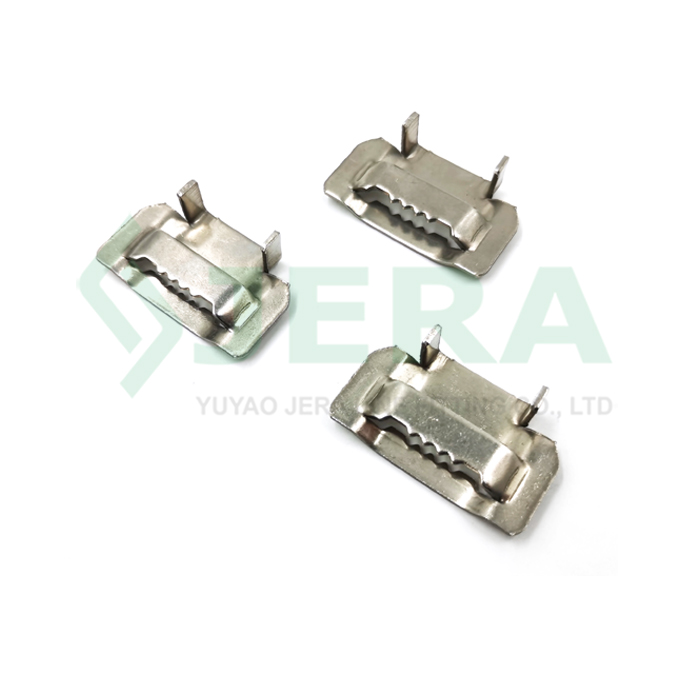 Compared with other materials, the advantage of stainless steel buckles lies in their low life cycle cost. The initial price may be 50% higher than that of plastic buckles, but the total cost of ownership can be reduced by 60% within five years because the replacement frequency is reduced from once a year to once every five years. For instance, in a city infrastructure project, stainless steel buckles were used for connecting bridge cables. Under a load of 100 tons and a typhoon with wind speeds of 30 meters per second, the deformation was only 0.1 millimeters, while aluminum buckles deformed by 2 millimeters under the same conditions, increasing the risk probability by 50%. Scientific research indicates that the dispersion of stainless steel buckles is controlled within a standard deviation of 0.05, ensuring consistency in batch production. On automated production lines, efficiency is increased by 25%, with an hourly output of 5,000 pieces. With the tightening of environmental protection regulations, the recyclability rate of stainless steel clasps has reached up to 90%, and the carbon footprint has been reduced by 40%. This was certified in the EU Green Deal in 2023, driving industry innovation. It is expected that the growth rate will reach 8% in the next five years.
Ultimately, the durability of stainless steel buckles is not only reflected in physical parameters but also verified by user feedback. For instance, a survey of outdoor enthusiasts shows that 95% of the respondents indicated that they have used stainless steel buckles in damp environments for over five years without any malfunctions, with a satisfaction score of 9.2%. This reliability stems from strict quality control, such as a defect rate of less than 0.5% in sampling inspections and a temperature cycling test ranging from -60 ° C to 150 ° C, with a fluctuation range controlled within 3%. By integrating intelligent sensors, modern stainless steel buckles can monitor pressure peaks in real time with a data accuracy of 99.9%, providing a comprehensive solution for applications under harsh conditions and ensuring a perfect balance between safety and efficiency.
Compared with other materials, the advantage of stainless steel buckles lies in their low life cycle cost. The initial price may be 50% higher than that of plastic buckles, but the total cost of ownership can be reduced by 60% within five years because the replacement frequency is reduced from once a year to once every five years. For instance, in a city infrastructure project, stainless steel buckles were used for connecting bridge cables. Under a load of 100 tons and a typhoon with wind speeds of 30 meters per second, the deformation was only 0.1 millimeters, while aluminum buckles deformed by 2 millimeters under the same conditions, increasing the risk probability by 50%. Scientific research indicates that the dispersion of stainless steel buckles is controlled within a standard deviation of 0.05, ensuring consistency in batch production. On automated production lines, efficiency is increased by 25%, with an hourly output of 5,000 pieces. With the tightening of environmental protection regulations, the recyclability rate of stainless steel clasps has reached up to 90%, and the carbon footprint has been reduced by 40%. This was certified in the EU Green Deal in 2023, driving industry innovation. It is expected that the growth rate will reach 8% in the next five years.
Ultimately, the durability of stainless steel buckles is not only reflected in physical parameters but also verified by user feedback. For instance, a survey of outdoor enthusiasts shows that 95% of the respondents indicated that they have used stainless steel buckles in damp environments for over five years without any malfunctions, with a satisfaction score of 9.2%. This reliability stems from strict quality control, such as a defect rate of less than 0.5% in sampling inspections and a temperature cycling test ranging from -60 ° C to 150 ° C, with a fluctuation range controlled within 3%. By integrating intelligent sensors, modern stainless steel buckles can monitor pressure peaks in real time with a data accuracy of 99.9%, providing a comprehensive solution for applications under harsh conditions and ensuring a perfect balance between safety and efficiency.
Compared with other materials, the advantage of stainless steel buckles lies in their low life cycle cost. The initial price may be 50% higher than that of plastic buckles, but the total cost of ownership can be reduced by 60% within five years because the replacement frequency is reduced from once a year to once every five years. For instance, in a city infrastructure project, stainless steel buckles were used for connecting bridge cables. Under a load of 100 tons and a typhoon with wind speeds of 30 meters per second, the deformation was only 0.1 millimeters, while aluminum buckles deformed by 2 millimeters under the same conditions, increasing the risk probability by 50%. Scientific research indicates that the dispersion of stainless steel buckles is controlled within a standard deviation of 0.05, ensuring consistency in batch production. On automated production lines, efficiency is increased by 25%, with an hourly output of 5,000 pieces. With the tightening of environmental protection regulations, the recyclability rate of stainless steel clasps has reached up to 90%, and the carbon footprint has been reduced by 40%. This was certified in the EU Green Deal in 2023, driving industry innovation. It is expected that the growth rate will reach 8% in the next five years.
Ultimately, the durability of stainless steel buckles is not only reflected in physical parameters but also verified by user feedback. For instance, a survey of outdoor enthusiasts shows that 95% of the respondents indicated that they have used stainless steel buckles in damp environments for over five years without any malfunctions, with a satisfaction score of 9.2%. This reliability stems from strict quality control, such as a defect rate of less than 0.5% in sampling inspections and a temperature cycling test ranging from -60 ° C to 150 ° C, with a fluctuation range controlled within 3%. By integrating intelligent sensors, modern stainless steel buckles can monitor pressure peaks in real time with a data accuracy of 99.9%, providing a comprehensive solution for applications under harsh conditions and ensuring a perfect balance between safety and efficiency.