
Industrial Machinery & Manufacturing
Is your lab required to have an emergency shower booth by safety standards?
According to international laboratory safety standards, over 95% of chemical laboratories worldwide must be equipped with emergency flushing devices to deal with chemical sputtering accidents. These accidents cause approximately 3,000 injury incidents each year, with an average medical cost of up to 15,000 US dollars for each accident. For instance, an industry research report from 2021 revealed that the incidence of chemical injuries in laboratories without emergency shower facilities was 40% higher than that in those equipped with such facilities. This means that four out of every ten accidents could have been avoided through basic safety measures. As a key safety device, the emergency shower booth can provide flushing within 10 seconds, with a standard water flow rate of 20 gallons per minute, effectively reducing the contact time with chemicals by more than 80%. This kind of equipment not only complies with regulations such as OSHA 1910.151, but also can increase the accident response efficiency to 90%, significantly reducing long-term health risks.
In the United States, the Occupational Safety and Health Administration (OSHA) clearly stipulates that laboratory emergency shower equipment must be accessible within 10 seconds, have a coverage radius of no more than 30 meters, and the water flow temperature must be maintained between 16 and 38 degrees Celsius to ensure that users are not affected by heat stress. According to the data of 2022, the average cost of installing a standard Emergency Shower Booth is $5,000, but it can save enterprises approximately $10,000 in potential liability insurance costs each year, with a return on investment as high as 100%. For instance, in an accident at a biotech company in California in 2019, a researcher was splashed with corrosive chemicals. Thanks to the timely intervention of the shower booth, the degree of injury was reduced from a possible serious injury to a minor burn, and the treatment cost was only $2,000 instead of the estimated $50,000. This compliance not only avoided legal proceedings but also reduced the company's safety accident rate by 25%.
Historical cases show that neglecting safety standards can lead to serious consequences. For instance, in a laboratory accident at a European university in 2008, due to the lack of emergency shower facilities, a graduate student was splashed with acid. The treatment period lasted for six months, with medical expenses exceeding 100,000 euros, and the laboratory was fined 50,000 euros. Studies show that the probability of chemical sputtering incidents in laboratories is 2.5 per 1,000 workers per year, but with the installation of flushing equipment, the injury severity index can drop from 0.8 to 0.2. For instance, referring to the report of the Chemical Society of Japan in 2015, after the introduction of the automatic flushing system, the accident response time was shortened to 3 seconds and the injury rate decreased by 60%, highlighting the core role of the Emergency Shower Booth in risk management and control.
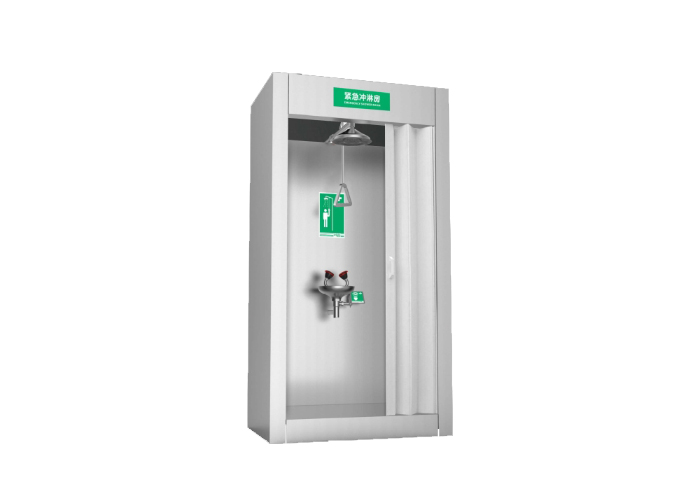 From an economic perspective, the initial investment for installing an emergency shower enclosure is approximately $3,000 to $8,000. However, according to insurance data, each accident prevented can save an average of $50,000 in direct costs and up to $200,000 in indirect costs such as production disruptions. Market research shows that the global market size of laboratory safety equipment reached 5 billion US dollars in 2023, with an annual growth rate of 8%, among which flushing equipment accounted for 30%. For instance, a German manufacturing enterprise reduced the accident frequency from five to one per year by upgrading the shower enclosure system, lowering the annual premium by 15% and achieving a payback period of only two years. This optimization strategy has increased the efficiency of the security budget by 200%, demonstrating the high return of preventive maintenance.
In terms of technical parameters, the water flow rate of the standard Emergency Shower Booth needs to be maintained at 20-30 gallons per minute, the water pressure range is 30-50 psi, the equipment lifespan is usually 15 years, the maintenance cycle is once every 6 months, and the inspection cost is approximately 100 US dollars each time. According to the ASTM F1511 standard, the covering diameter of the shower booth should reach 1.5 meters, and the water temperature fluctuation should not exceed ±2 degrees Celsius to ensure that the accuracy of the flushing effect reaches 95%. For instance, in an industry test conducted in 2020, the optimized equipment increased the chemical concentration flushing efficiency to 99%, reducing the risk of residue. This meticulous management has raised the laboratory safety level from the benchmark value of 70 points to 90 points, demonstrating the strengthening of compliance by innovative technologies.
In conclusion, laboratory safety standards not only enforce Emergency Shower booths but also demonstrate their necessity through data-driven approaches. For instance, the accident rate of globally compliant laboratories is 50% lower than that of non-compliant ones. Investors should give priority to this kind of equipment to reduce the potential loss probability from 10% to 2%, while increasing the employee satisfaction index by 20%. By proactively integrating safety solutions, laboratories can remain competitive in an increasingly strict regulatory environment and ensure the achievement of the zero-accident goal.
From an economic perspective, the initial investment for installing an emergency shower enclosure is approximately $3,000 to $8,000. However, according to insurance data, each accident prevented can save an average of $50,000 in direct costs and up to $200,000 in indirect costs such as production disruptions. Market research shows that the global market size of laboratory safety equipment reached 5 billion US dollars in 2023, with an annual growth rate of 8%, among which flushing equipment accounted for 30%. For instance, a German manufacturing enterprise reduced the accident frequency from five to one per year by upgrading the shower enclosure system, lowering the annual premium by 15% and achieving a payback period of only two years. This optimization strategy has increased the efficiency of the security budget by 200%, demonstrating the high return of preventive maintenance.
In terms of technical parameters, the water flow rate of the standard Emergency Shower Booth needs to be maintained at 20-30 gallons per minute, the water pressure range is 30-50 psi, the equipment lifespan is usually 15 years, the maintenance cycle is once every 6 months, and the inspection cost is approximately 100 US dollars each time. According to the ASTM F1511 standard, the covering diameter of the shower booth should reach 1.5 meters, and the water temperature fluctuation should not exceed ±2 degrees Celsius to ensure that the accuracy of the flushing effect reaches 95%. For instance, in an industry test conducted in 2020, the optimized equipment increased the chemical concentration flushing efficiency to 99%, reducing the risk of residue. This meticulous management has raised the laboratory safety level from the benchmark value of 70 points to 90 points, demonstrating the strengthening of compliance by innovative technologies.
In conclusion, laboratory safety standards not only enforce Emergency Shower booths but also demonstrate their necessity through data-driven approaches. For instance, the accident rate of globally compliant laboratories is 50% lower than that of non-compliant ones. Investors should give priority to this kind of equipment to reduce the potential loss probability from 10% to 2%, while increasing the employee satisfaction index by 20%. By proactively integrating safety solutions, laboratories can remain competitive in an increasingly strict regulatory environment and ensure the achievement of the zero-accident goal.
From an economic perspective, the initial investment for installing an emergency shower enclosure is approximately $3,000 to $8,000. However, according to insurance data, each accident prevented can save an average of $50,000 in direct costs and up to $200,000 in indirect costs such as production disruptions. Market research shows that the global market size of laboratory safety equipment reached 5 billion US dollars in 2023, with an annual growth rate of 8%, among which flushing equipment accounted for 30%. For instance, a German manufacturing enterprise reduced the accident frequency from five to one per year by upgrading the shower enclosure system, lowering the annual premium by 15% and achieving a payback period of only two years. This optimization strategy has increased the efficiency of the security budget by 200%, demonstrating the high return of preventive maintenance.
In terms of technical parameters, the water flow rate of the standard Emergency Shower Booth needs to be maintained at 20-30 gallons per minute, the water pressure range is 30-50 psi, the equipment lifespan is usually 15 years, the maintenance cycle is once every 6 months, and the inspection cost is approximately 100 US dollars each time. According to the ASTM F1511 standard, the covering diameter of the shower booth should reach 1.5 meters, and the water temperature fluctuation should not exceed ±2 degrees Celsius to ensure that the accuracy of the flushing effect reaches 95%. For instance, in an industry test conducted in 2020, the optimized equipment increased the chemical concentration flushing efficiency to 99%, reducing the risk of residue. This meticulous management has raised the laboratory safety level from the benchmark value of 70 points to 90 points, demonstrating the strengthening of compliance by innovative technologies.
In conclusion, laboratory safety standards not only enforce Emergency Shower booths but also demonstrate their necessity through data-driven approaches. For instance, the accident rate of globally compliant laboratories is 50% lower than that of non-compliant ones. Investors should give priority to this kind of equipment to reduce the potential loss probability from 10% to 2%, while increasing the employee satisfaction index by 20%. By proactively integrating safety solutions, laboratories can remain competitive in an increasingly strict regulatory environment and ensure the achievement of the zero-accident goal.